
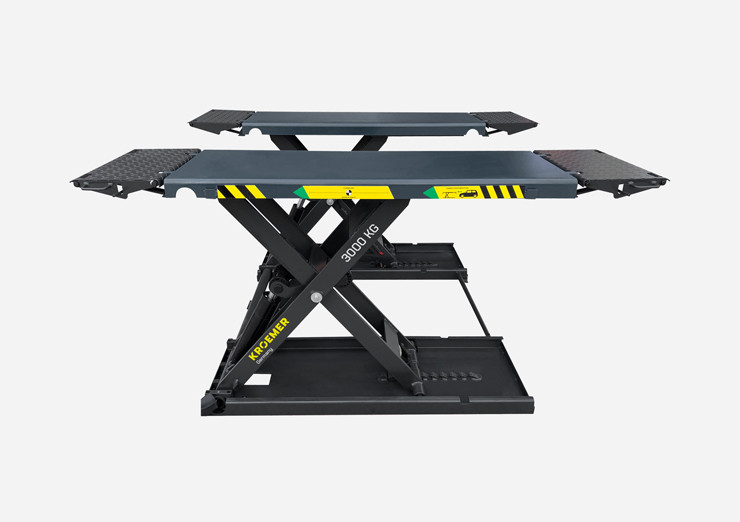
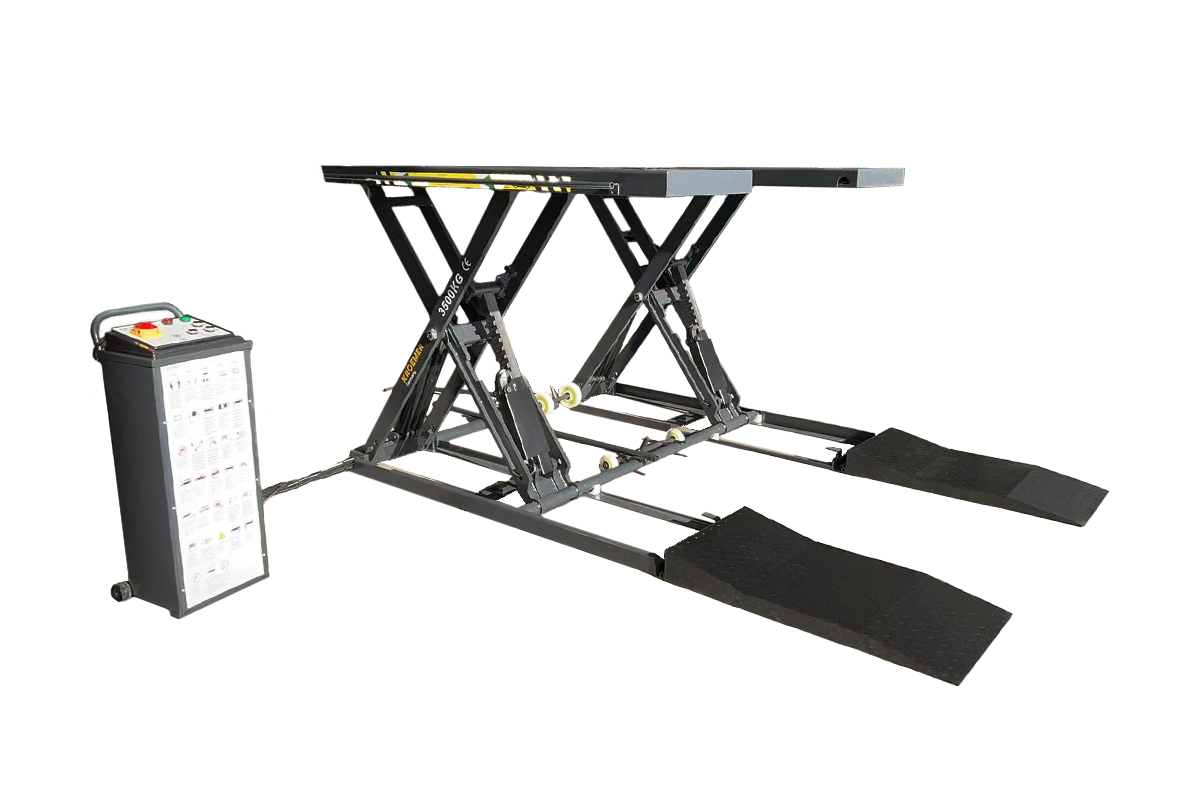
After the post lift, the scissor lift is one of the most widely used car lifts in Germany. Its characteristic scissor mechanism operates using a sturdy X-system: as the lift rises, the structure spreads apart; as it lowers, it folds compactly together. Thanks to a low clearance height of approx. 10 cm, even lowered vehicles can be accommodated without any problems. At the same time, the scissor lift impresses with its minimal space requirements and provides ample door clearance when raised. Every car lift is fully automatic and ISO 9001 certified. The lift platform is of high-quality construction, powder-coated and additionally top-coated – ensuring a durable surface for daily workshop use.
-
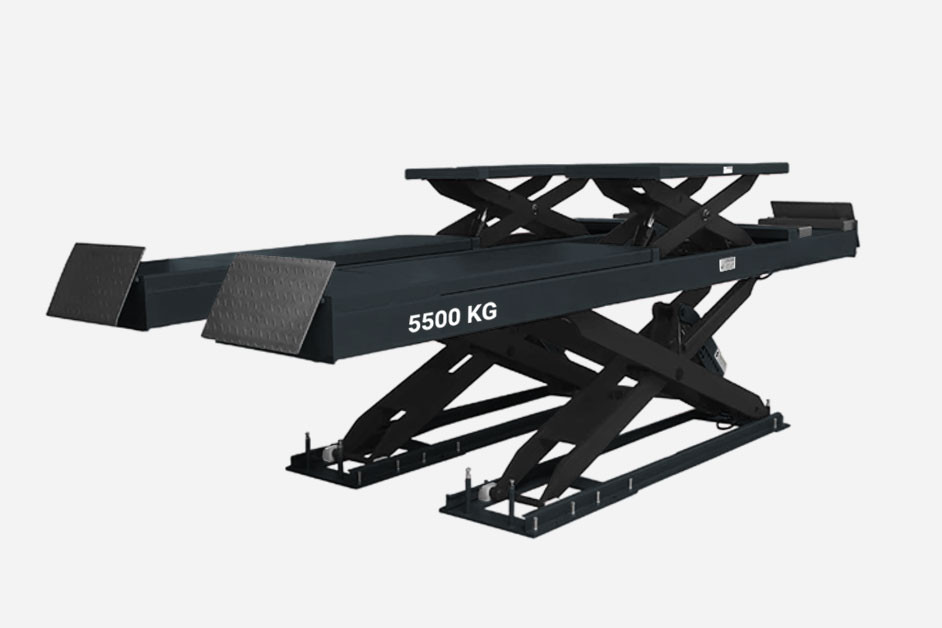
- For professional maintenance work on tyres, suspension and bodywork
- with wheel-free lift, optional axle jack
- Lifting height max.: 2.185 mm
- Carrying Capacity: 5.500 kg
Out of stock
Compare
KROEMER offers over 30 different scissor lifts – ranging from compact mid-rise scissor lifts to high-performance full-rise scissor lifts with a high load capacity. Models with a load capacity of up to 5 tonnes cover a wide range of applications – from cars to larger vehicles such as vans or caravans. In addition to classic automotive scissor lifts, mobile variants and stationary solutions are also available. An extensive range of accessories further expands the scope of application. Custom-made solutions for industry, retail or haulage companies can be provided on request.
Scissor lift - KROEMER recommendations
Struggling to choose a scissor lift? The X47, XX50 and XX84 models are among the most popular solutions in their respective categories. The X47 is a compact mid-rise scissor lift designed for quick servicing jobs, offering a low clearance height and minimal space requirements. The XX50 represents the classic full-rise scissor lift with a 3.0 t load capacity and a solid 1900 mm lift height for daily workshop use. The XX84, on the other hand, is a high-performance drive-on scissor lift for underfloor installation, which is particularly characterised by its higher load capacity and integrated axle-free lift for professional chassis and brake work.
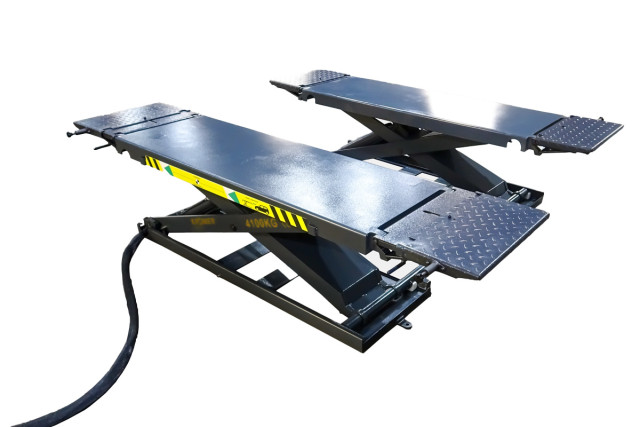
KROEMER X47
Mobile scissor lift with extendable ramps – 4.100 kg load capacity & lifting height 1,200 mm
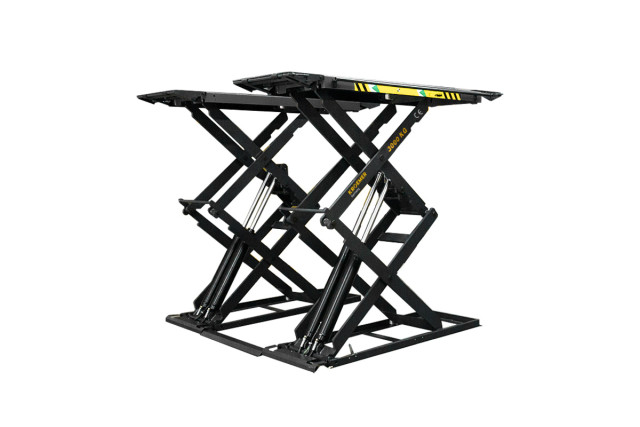
KROEMER XX50
Above-floor full-rise scissor lift with redundant cylinder system, 3.000 kg load capacity & 1,900 mm lift height
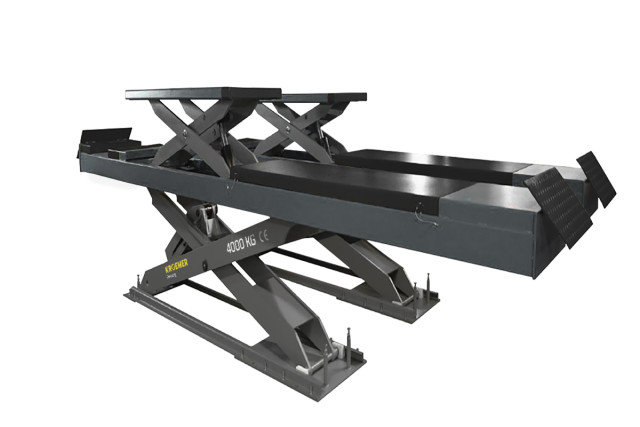
Kroemer XX84
Underfloor drive-on scissor lift, including a wheel-free jack with a lifting capacity of 4.000 kg
Scissor lifts – models explained simply
What types of scissor lifts are there?
At KROEMER, you can find high-quality short-stroke scissor lifts and full-rise scissor lifts that are suitable for a wide range of repairs and wheel alignment. With a wheelbase of 2.4 to 4 metres and a load capacity of up to 5 tonnes, some selected models of the KROEMER scissor lifts are even suitable for motorhomes. Our range of scissor lifts is divided into mobile lifts and permanently installed scissor lifts. The mobile mid-rise scissor lift has a more compact design than the permanently installed lift, but also a limited lifting height of 70–120 cm without the corresponding extensions. As such, these lifts are particularly suitable for tasks such as changing tyres, replacing brake pads, working on the side skirts (Smart Repair), applying vehicle wraps, or simply for an oil change. The fixed-installation scissor lifts are characterised by their greater lifting height. The so-called full-rise scissor lift is often used here, with a lifting height of 160–210 cm.
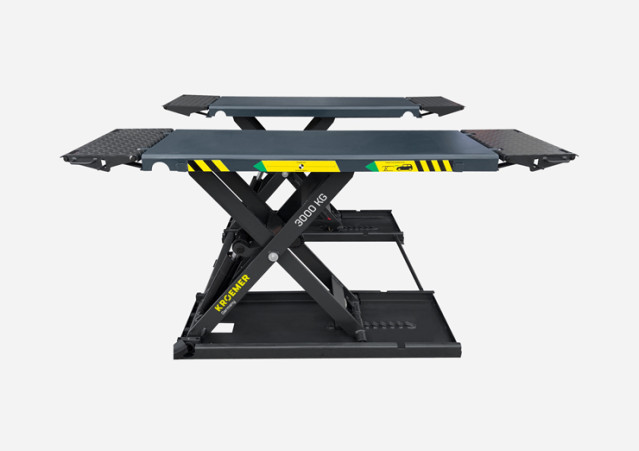
Mid-rise scissor lift
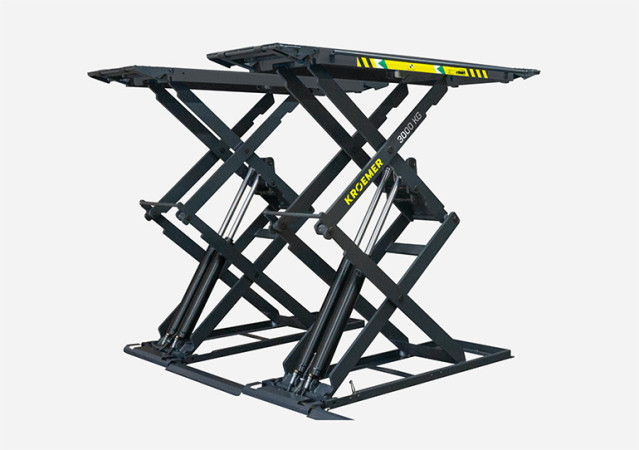
Full-rise scissor lift
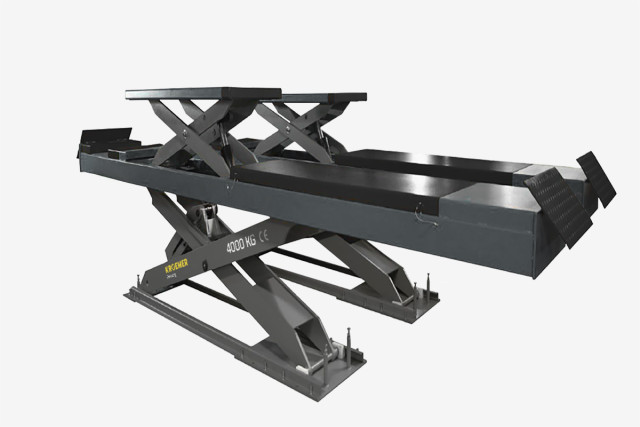
Drive-on scissor lifts
Motorcycle lifts
A comparison of scissor lifts: Which car lift is right for me?
Are you looking to buy a scissor lift? Choosing the right car lift depends largely on the intended use, available space, vehicle type and the required range of functions. A motorcycle lift is specifically designed for two-wheelers and provides a secure support surface as well as an ergonomic working height for motorbikes and scooters. A mid-rise scissor lift is recommended where space is limited and for quick service jobs such as tyre changes or maintenance. It is compact, versatile and ideal for cars. A full-rise scissor lift is the right solution if extensive repair work is carried out regularly and a greater lifting height and higher load capacity are required. A drive-on scissor lift (drive-on or in-ground variant) is particularly suitable for workshops with a high vehicle throughput. It enables comfortable working, often including axle-free lifts for chassis and brake servicing, and is the only type suitable for professional 3D wheel alignment.
|
Features |
Motorcycle lift |
Mid-rise scissor lift |
Full-rise scissor lift |
Drive-on scissor lift |
|---|---|---|---|---|
|
Suitable for cars |
✕ |
✔︎ |
✔︎ |
✔︎ |
|
For vehicles over 3 tonnes |
✔︎ |
✔︎ |
✔︎ |
✔︎ |
|
Suitable for extensive repair work |
✕ |
✔︎ |
✔︎ |
✔︎ |
|
Integrated wheel-free jack |
✕ |
✕ |
✕ |
✔︎ |
|
Suitable for 3D wheel alignment |
✕ |
✕ |
✕ |
✔︎ |
|
Lifting height over 1.20 m |
✕ |
✕ |
✔︎ |
✔︎ |
|
Permanent floor installation required |
✕ |
✕ |
✔︎ |
✔︎ |
|
Portable or flexible to set up |
✕ |
✔︎ |
✕ |
✕ |
The comparison highlights the clear distinction between specialised and fully equipped hydraulic scissor lifts in the field of modern lifting technology. Whilst the motorcycle lift is designed exclusively for two-wheelers, mid-rise scissor lifts, double-scissor lifts and drive-on car lifts meet the needs of traditional car workshops. The mid-rise scissor lift is particularly advantageous where space is limited and for typical maintenance work, but is functionally more limited in terms of load capacity, working height and features.
The full-rise scissor lifts can be used as above-floor or under-floor variants and, thanks to their higher load capacity, greater lifting height and robust construction, offer an extended range of applications – including for small vans. The drive-on scissor lift represents the most technically comprehensive solution: it combines high stability, axle-free lifting, extensive features and is the only type suitable for 3D wheel alignment.
A comparison of popular scissor lifts
The comparison makes it clear that the choice and specifications depend heavily on the intended application – particularly in terms of space requirements, load capacity, lift height and additional functions such as axle-free lifting or wheel alignment. However, there are further differences within the range of scissor lifts depending on the design and performance level. In the following section, we therefore compare popular models from the mid-rise, full-rise and underfloor scissor lift ranges in detail.
|
Features |
|||
|---|---|---|---|
|
Area of application |
Wheel repairs, Smart Repair |
Gearbox, wheels, engine, bodywork, paintwork |
Wheel alignment, gearbox, wheel, engine, bodywork, paintwork |
|
Max. lifting height |
1,20 m |
1,90 m |
1,85 m |
|
Load capacity |
4.100 kg |
3.000 kg |
4.000 kg |
|
Type of unlocking mechanism |
Electromagnetic |
Redundant cylinder system (no compressed air) |
Compressed air |
|
Space requirements |
Low – compact |
Medium |
Larger – fixed installation position |
|
Wheel-free jack |
not available |
not available |
integrated |
|
Suitable for |
Cars & light commercial vehicles |
Commercial vehicles, large cars |
Versatile |
The table clearly shows how the models are categorised by performance level and primary application. Whilst the X47 short-stroke scissor lift is compact and space-saving, designed for everyday workshop use, the XX50 full-rise scissor lift offers greater load capacity and lift height for heavy vehicles. The XX84 drive-on car lift impresses with its long platforms and versatile applications, particularly for underbody and reception work such as 3D wheel alignment.
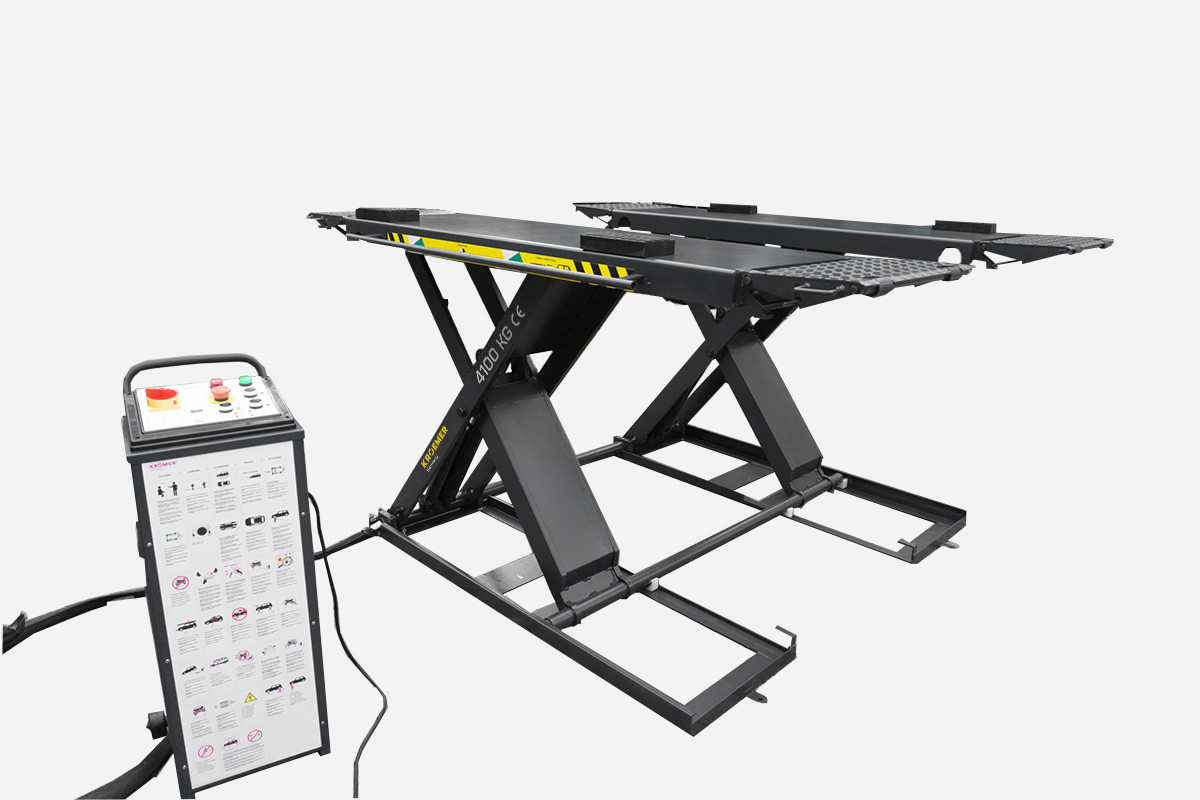
Mid-rise scissor lift: Compact and versatile, with a lifting height of up to 1.2 m
The mid-rise scissor lift is the ideal solution for workshops and garages where flexibility and a small footprint are crucial. With a lifting height of approx. 0.70 to 1.20 m, it is ideal for maintenance work, tyre servicing and quick service jobs. As no ground-level installation is required, the lift is supplied with a mobile chassis and can be used without any problems at different locations.
Mid-rise scissor lift:
- Particularly low drive-over height of approx. 10 cm
- Load capacity approx. 2.8 – 4.0 t depending on model
- Includes mobile kit for flexible use in workshops or garages
The mid-rise scissor lift thus represents a compact and economical solution for daily workshop operations – wherever rapid deployment and easy positioning are required.
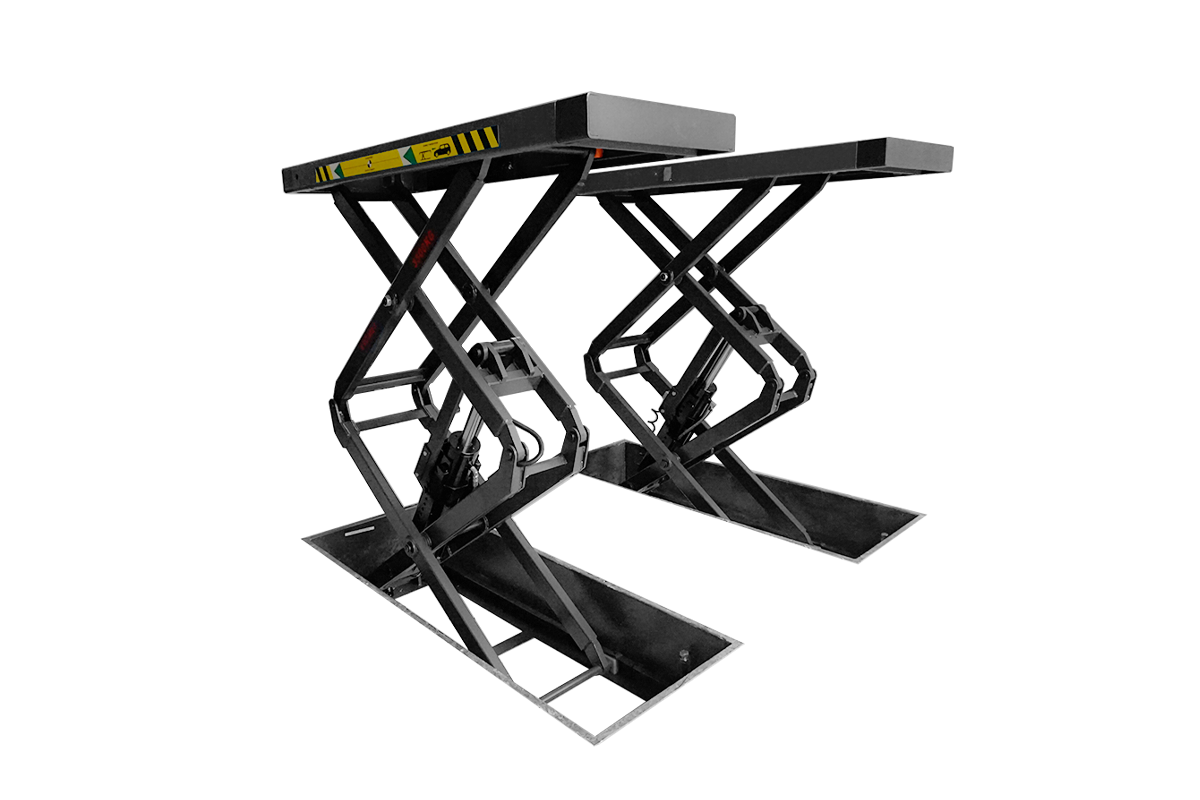
Full-rise scissor lift: Permanently fixed, with a lifting height of up to 2.0 m
The full-rise scissor lift is the right choice for garages that regularly work on heavy-duty vehicles and require a high load capacity. Depending on the model, it can be installed as an in-ground or above-ground scissor lift – tailored to the structural conditions and individual requirements. With its greater lifting height, it is ideal for comfortable working in day-to-day garage operations, even with SUVs or small vans.
- High lifting height
- Underfloor or above-floor installation
- High load capacity for SUVs & vans
Full-rise scissor lifts are a particularly robust solution for repair and maintenance work and for businesses that prioritise long-term durability and professional working conditions.
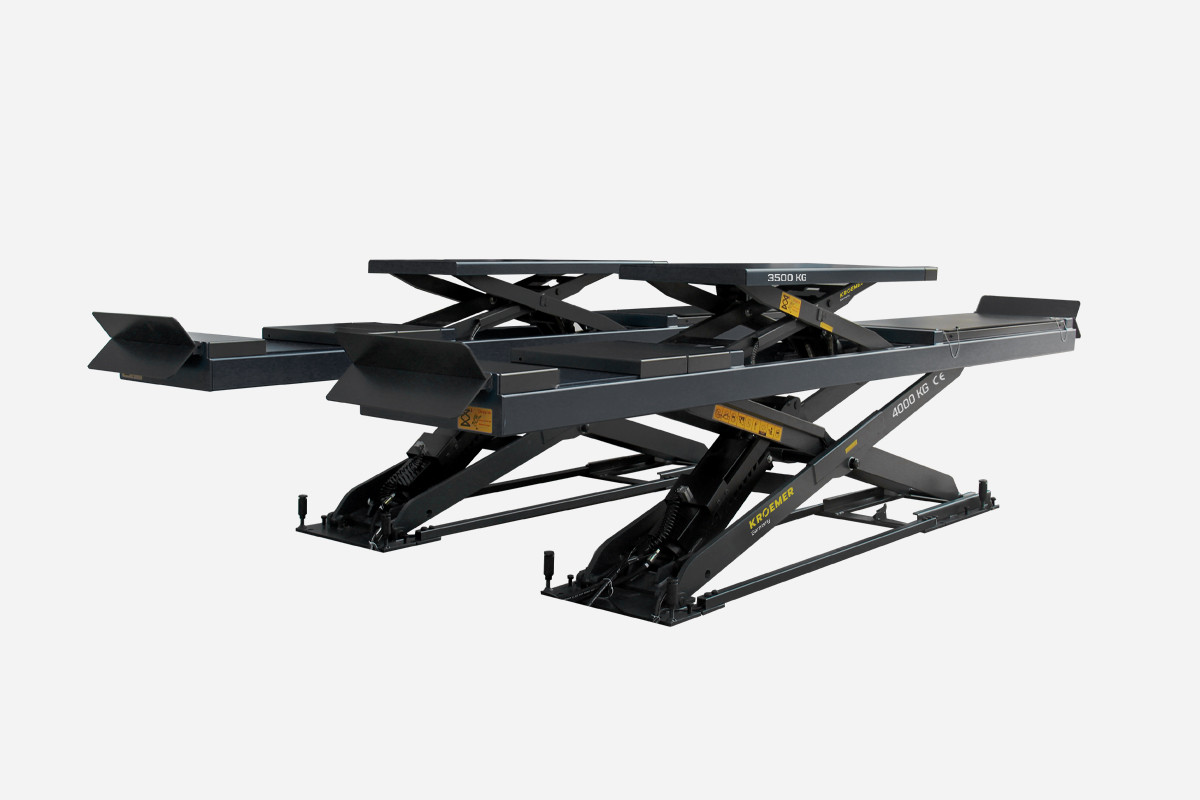
Drive-on car lift: Ideal for vehicle intake
The drive-on scissor lift is a specialised type of scissor lift, primarily used in reception areas or for wheel alignment. As a robust automotive scissor lift, it offers additional flexibility thanks to its integrated axle-free lift. Technically, it is often based on a full-rise scissor lift to ensure sufficient lifting height and stability.
Advantages of the drive-on scissor lift:
- Ideal for customer reception & vehicle checks
- Integrated axle-free lift available
- High load capacity – high lifting height
Drive-on scissor lifts are perfect for professional garages that offer measurement, diagnostics and professional vehicle reception in addition to standard maintenance and repair work.
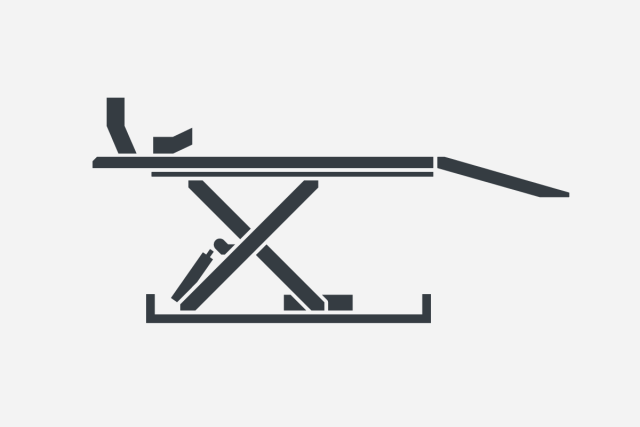
Motorcycle car lift: Perfect for motorcycles
The motorcycle lift is a specially adapted scissor lift designed for two-wheelers. Thanks to its narrow platform and sturdy construction, it is ideal for the maintenance, repair and servicing of motorcycles. Here, too, you benefit from the tried-and-tested technology of a hydraulic scissor lift, adapted to lighter vehicle weights.
Features of the motorcycle lift:
- Space-saving alternative to large scissor lifts
- Secure fixing via wheel clamp
- Compact design for motorcycles
Scissor lifts: a brief guide
The scissor lift is an integral part of modern workshop equipment in the automotive sector. The platforms are raised via a hydraulic system using hydraulic oil and lowered safely by releasing the lock. Thanks to its compact design and high load-bearing capacity, it is suitable for maintenance and repair work as well as tyre changes. Depending on the model – such as a mobile car lift or full-rise scissor lift – it can be used flexibly and is in some cases also designed for wheel alignment.
What is a scissor lift?
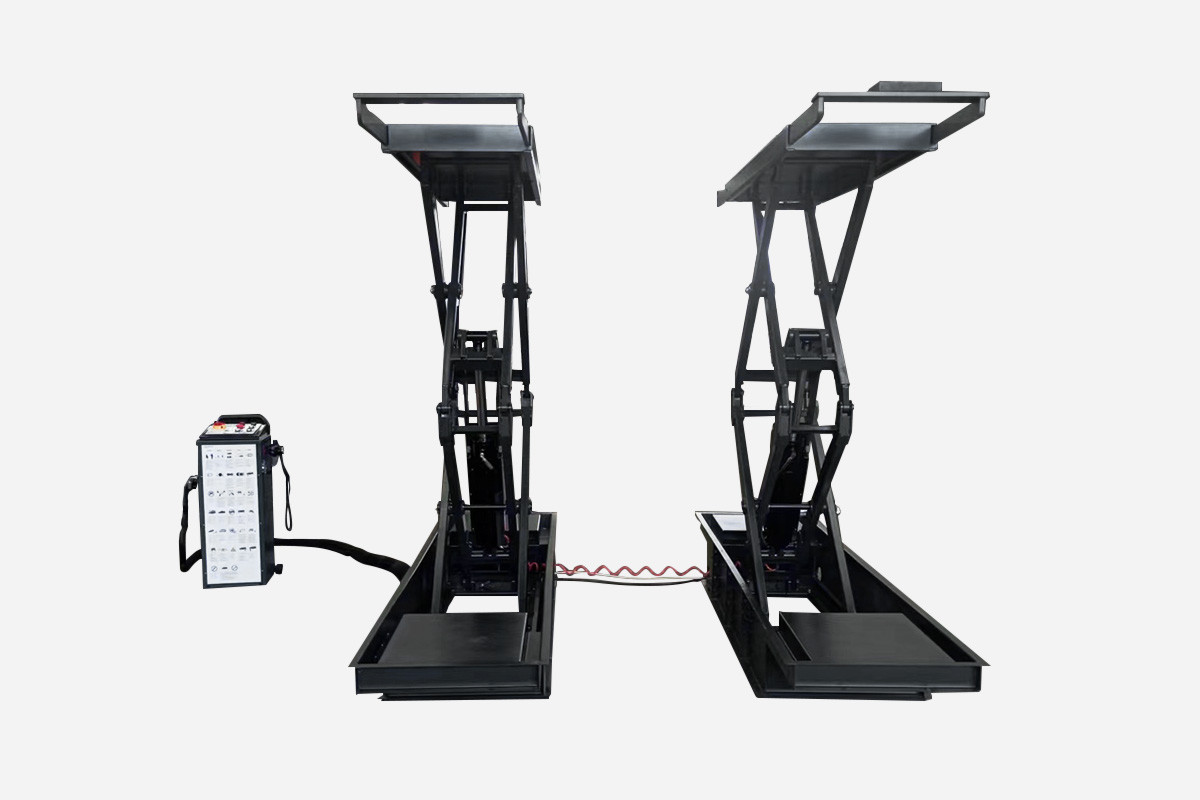
A hydraulic scissor lift is a key component of modern lifting technology in any professional garage. The vehicle is raised evenly via an oil-powered lifting system, with the characteristic scissor mechanism ensuring high stability and safe load support. Thanks to its space-saving design, it is particularly versatile – from standard cars to small vans, depending on the load capacity and model variant.
In brief:
- Hydraulic lifting system with robust construction
- High stability and load capacity (e.g. 3000 kg depending on the model)
- Suitable for maintenance, repair and servicing work
Depending on the version – such as a short-stroke scissor lift, double scissor lift or drive-on variant – the working height, features and area of application vary. This makes the scissor lift a versatile solution for professional use in workshops and service environments.
How does a scissor lift work?
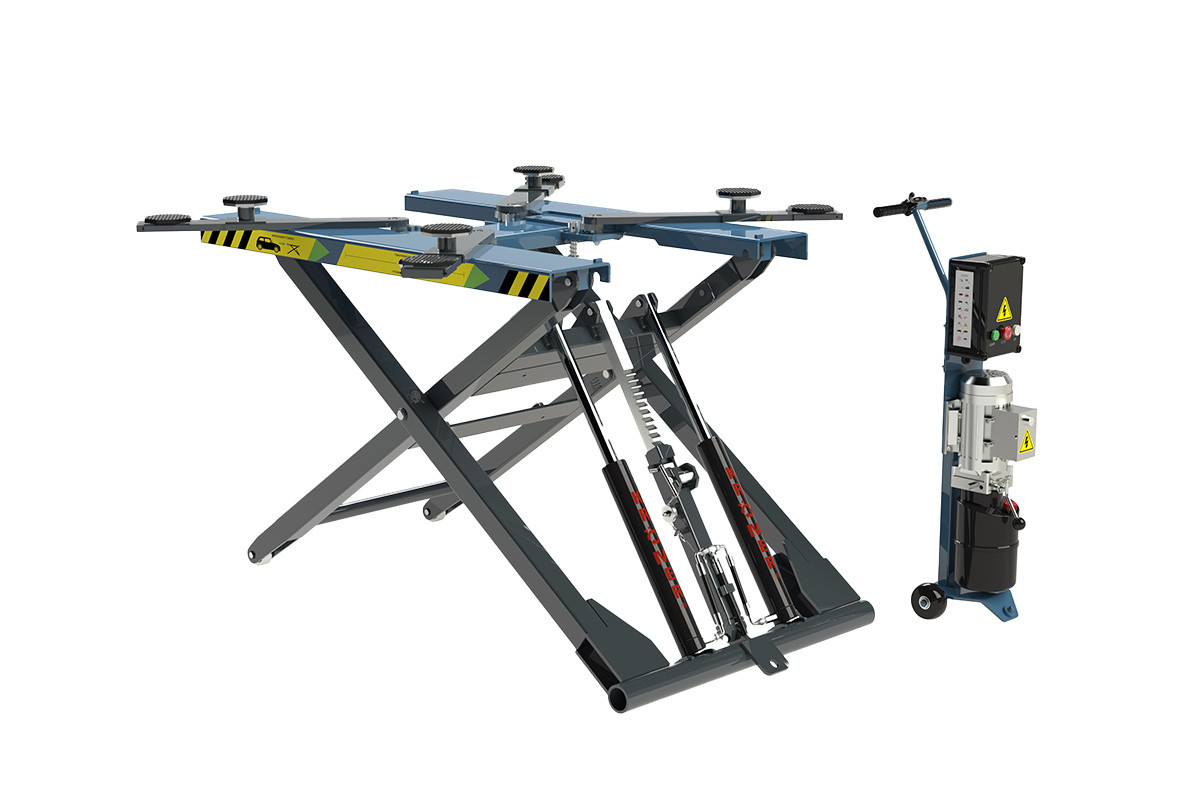
A scissor lift operates using a hydraulic system in which hydraulic oil exerts pressure on the scissor mechanism via cylinders. The entire lifting process is controlled via a control panel, which allows the lift to be raised and lowered in a controlled manner. The robust construction ensures even force distribution and high stability during workshop use.
Brief explanation of how it works:
- Control via control panel (raise/lower)
- Hydraulic system with cylinders and oil circuit
- Safety lock with electromagnetic or pneumatic release
Safety is ensured by a mechanical safety catch, which is unlocked either electromagnetically or by compressed air, depending on the model. Additionally, a redundant cylinder system can be integrated to provide dual safety for the lifting process. During lowering, the hydraulic pressure is specifically reduced so that the scissor lift returns safely and in a controlled manner to its starting position.
Above-ground or under-floor lift?
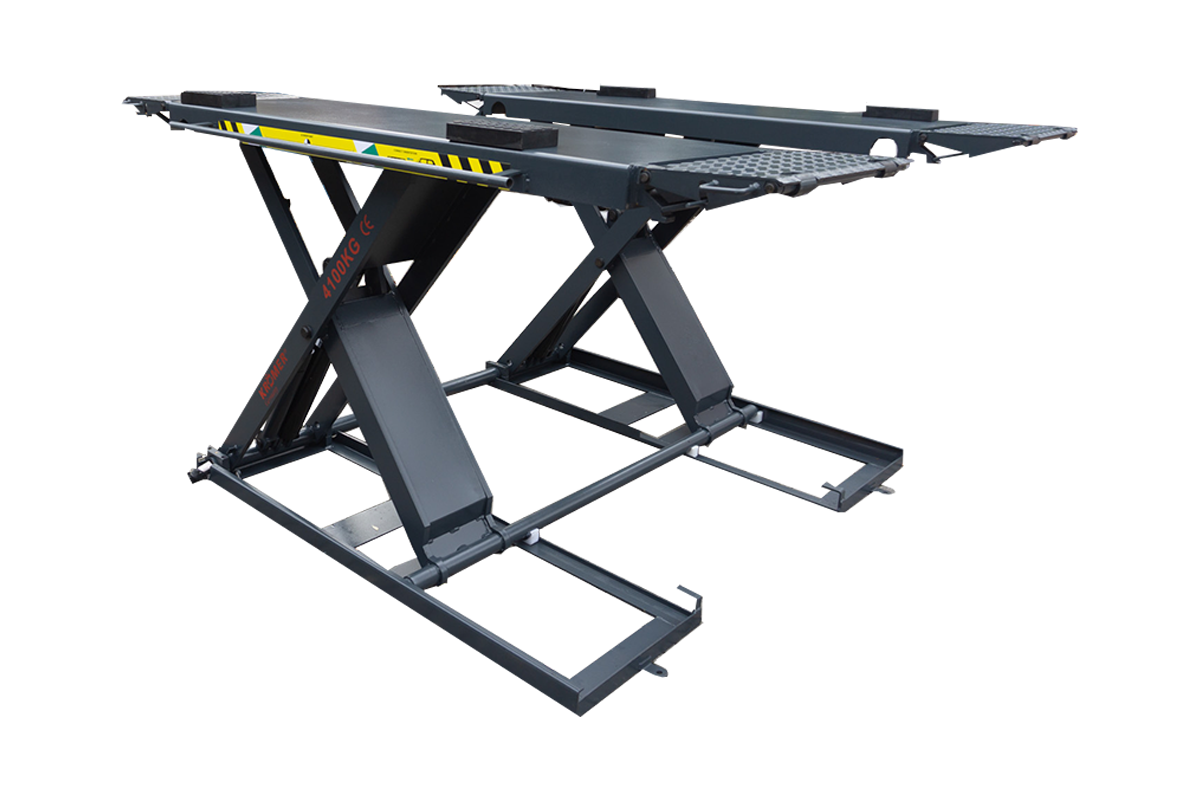
Anyone wishing to use a scissor lift for vehicles or to purchase a suitable scissor lift should distinguish between above-floor and in-floor models. The above-floor version is mounted directly on the workshop floor and requires no major floor modifications. An under-floor scissor lift, on the other hand, is recessed flush into the floor, ensuring a level driving surface and a high-quality appearance in the service or reception area.
- Above-ground: no excavation required, quick installation
- Under-floor: flush integration into the workshop floor
- Both variants are designed for stability and durability
Whether above-ground or under-floor – the workshop layout, intended use and investment planning are decisive factors. Anyone planning for the long term and looking to purchase scissor lifts should take into account the type of installation, equipment and the demands of daily operation.
Mobile scissor lift or stationary?
When deciding between a mobile and a stationary scissor lift, the key factors are the location of use and flexibility. A mobile scissor lift is equipped with a mobility kit and can be moved around within the workshop or garage. It is particularly suitable for changing workstations or limited spaces. A stationary model, on the other hand, is permanently installed – usually as an above-ground or in-ground variant – and is designed for continuous workshop operation.
Differences:
- Mobile: can be moved flexibly, ideal for variable use
- Stationary: fixed position, designed for continuous operation
When selecting a suitable scissor lift, you should consider whether a flexible, mobile solution or a permanently installed workstation makes more sense. The decisive factors are the available space, the frequency of use and the organisation of daily workshop operations.
Advantages of scissor lifts compared to column car lifts
Choosing the right car lift may not seem straightforward – when should you opt for a post car lift or a scissor lift? Below, we will briefly outline the advantages of scissor lifts compared to post car lifts.
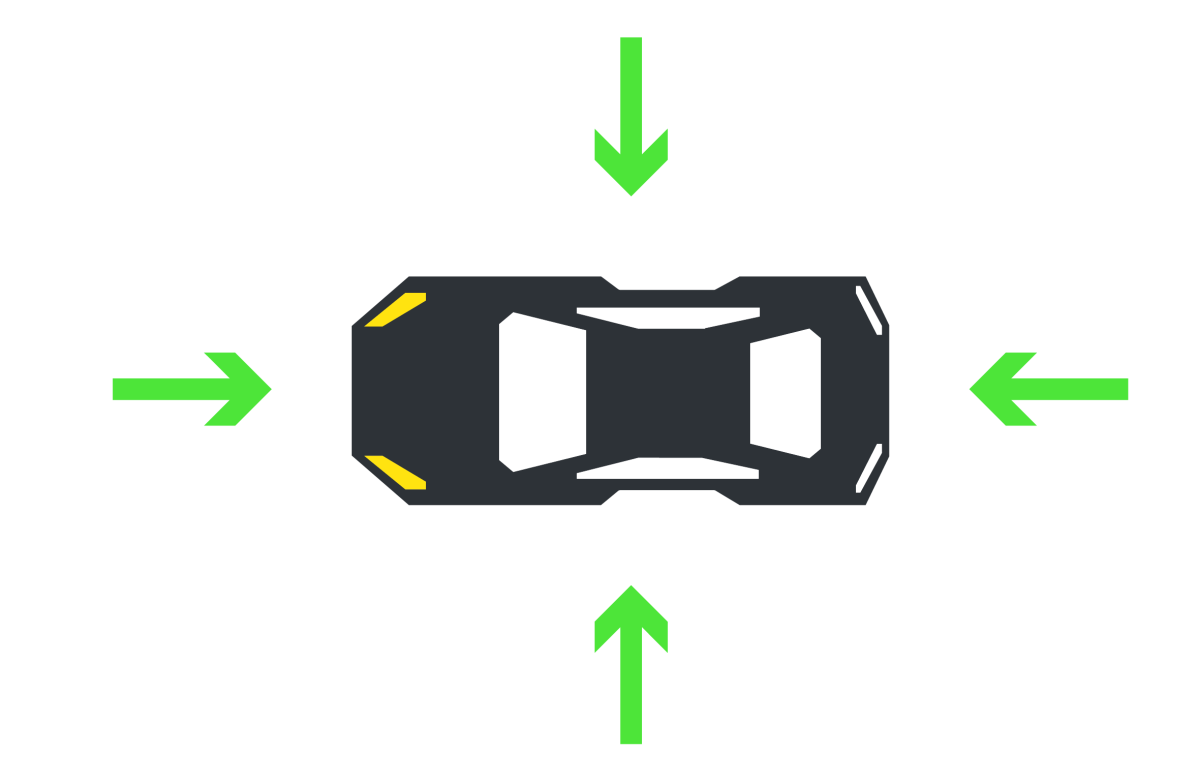
Scissor lifts are accessible from all sides
The hydraulic scissor lift provides safe and convenient access to the vehicle – from the underbody right through to the interior. Unlike a column lift, it does not require side support arms or columns within the working area, leaving the vehicle more accessible. The flexibly adjustable lifting height allows for ergonomic working during maintenance, repairs or diagnostics, whilst the sturdy scissor design ensures even load distribution.
- Unobstructed access without interfering columns
- Compact design with minimal space requirements
- Ergonomic working heights for versatile servicing tasks
Anyone looking to buy a scissor lift online is opting for a space-saving and practical solution that really comes into its own in structured workshop workflows.

Comfortable working height
Depending on the model, the hydraulic scissor lift offers a lifting height of approx. 70 to 200 cm, thereby providing a particularly comfortable and ergonomic working height. Mechanics can carry out work on the underbody, brakes, chassis or exhaust system mainly whilst standing, which noticeably reduces strain on the back and joints.
- Working heights of 70–200 cm for comfortable working
- Adaptable to different vehicle types
Compared to a column lift, the scissor lift also offers full working heights, but with a compact design and stable platform. This creates a safe and comfortable working area designed for efficient workflows in everyday workshop operations.
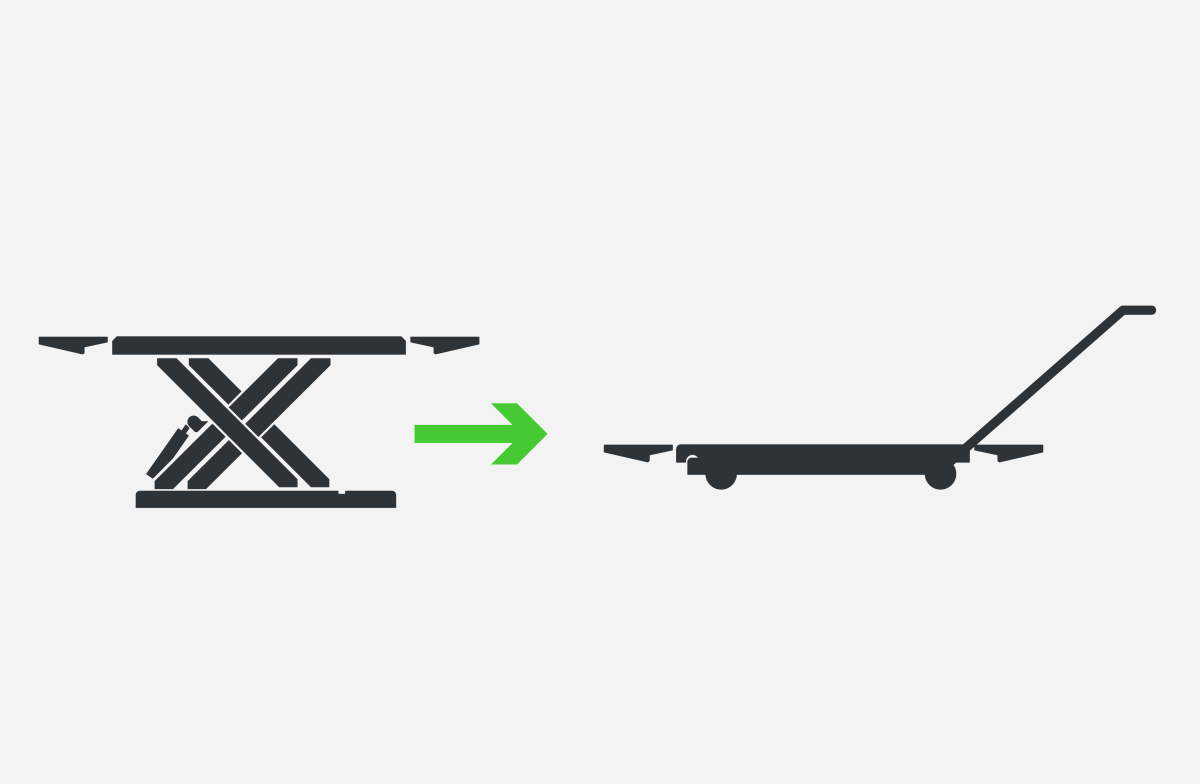
Mid-rise scissor lift: Compact & portable
The mid-rise scissor lift has a compact design and is ideal for flexible use in car workshops. Mobile mid-rise scissor lifts are particularly well-suited to quick tyre changes as well as structured maintenance and repair work. All Kroemer mid-rise scissor lifts come with a mobility kit as standard, allowing them to be moved around flexibly without the need for additional retrofitting.
- Compact, space-saving design
- Includes mobile kit for flexible use
- High load capacity for cars and small vans
Compared to column lifts, the mid-rise scissor lift stands out thanks to its low drive-over height and rapid readiness for use. It is easy to position and is therefore particularly cost-effective for garages seeking efficient and versatile lifting technology.
Both types of lifting platforms are an integral part of modern vehicle workshops, but differ significantly in terms of design, load capacity and primary application. Whilst the column lift operates via support arms and offers particular advantages when it comes to unobstructed wheel access, the scissor lift is based on a flat platform reinforced by drive-on ramps and features a compact design.
The following table clearly compares the most important technical and practical differences and helps in selecting the appropriate lifting technology for the specific workshop requirements.
|
Features |
Scissor lift |
Post lift |
|---|---|---|
|
Area of application |
Day-to-day workshop life, assembly work |
Heavy-duty work, large vehicles |
|
Max. lifting height |
Medium (typically 1.8–2.0 m) |
High (up to approx. 2.0 m+) |
|
Load capacity |
2,8 - 4,1 t |
High (approx. 3,2–6,0 t; up to 12 t) |
|
Acquisition costs |
more affordable |
more expensive |
|
Space requirements |
Small – compact |
Larger – requires more space |
|
Suitable for |
Cars & light commercial vehicles |
Commercial vehicles, large cars |
The table shows that both types of lifts are suitable for professional workshop use, but each has its own specific strengths. The scissor lift stands out in particular for its compact design and versatility, whilst the post lift often offers advantages in terms of unobstructed wheel access and for standard repair work.
Features of a scissor lift
In day-to-day workshop use, a scissor lift must, above all, be safe, powerful and durable. In addition to a robust hydraulic system, a comfortable working surface and a space-saving design, the focus is on certified safety features and high-quality workmanship. The following points outline the key features in detail.

A pleasant working environment
A Kroemer scissor lift is a versatile piece of equipment that allows you to raise vehicles precisely to the desired height. It can also be used outdoors – provided the ground is level and the control panel is kept safe inside the workshop.

Certified Kroemer quality
All Kroemer scissor lifts are manufactured in accordance with ISO 9001 and meet the highest safety standards, such as CE requirements for UVV approval. They feature industrially manufactured, hard-chromed hydraulic cylinders from quality-assured production – ensuring low failure rates, reduced maintenance and high operational reliability in everyday workshop use.

Powerful hydraulics
The hydraulic cylinders in our scissor lift are designed for a particularly long service life and are built to withstand heavy-duty use. With regular maintenance, the cylinders will continue to perform reliably even after more than 10 years.
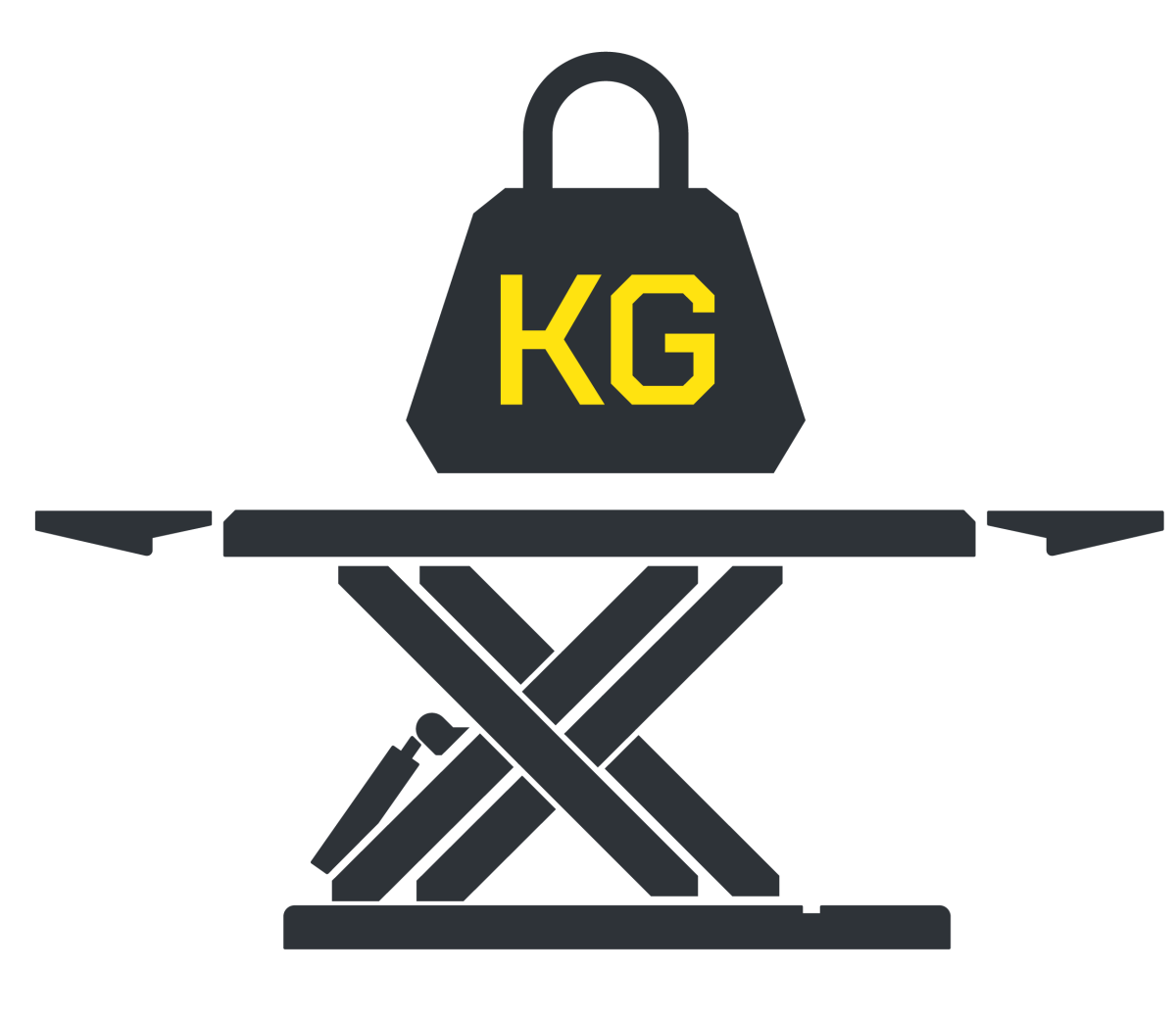
Durability
The durability of a scissor lift is down to its robust steel construction. High-quality components ensure that the automotive scissor lift remains reliable and capable of bearing heavy loads even with intensive use.
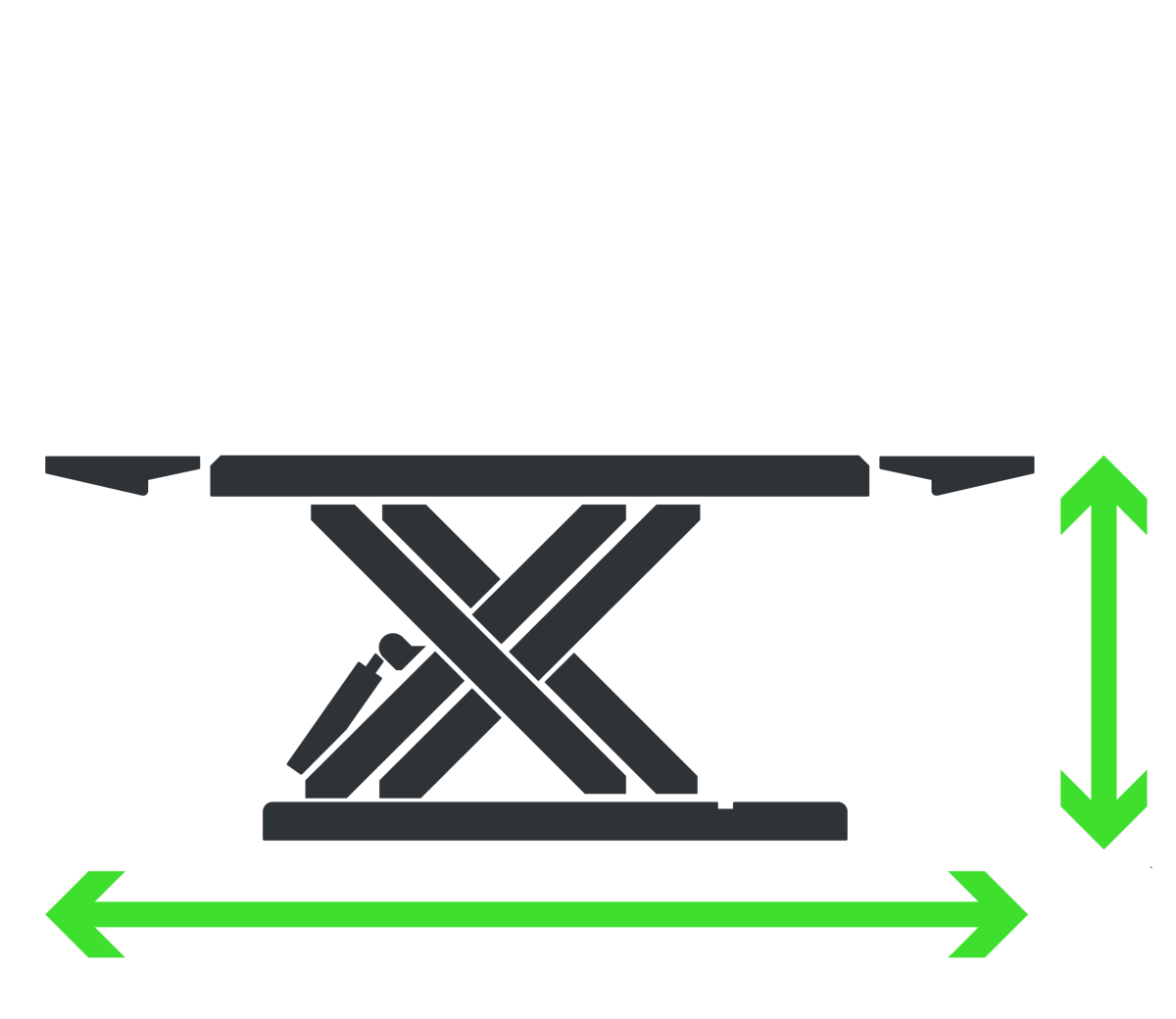
Scissor lift: Space-saving design
Scissor lifts are particularly popular in confined spaces. In-ground scissor lifts, which are installed beneath the floor, are also frequently used in such situations.

Safety first
Every Kroemer scissor lift is equipped with a CE stop and a deadman’s control. An audible signal during lowering prevents pinching, and every lift is inspected before delivery.
Workshop equipment for more efficient workflow
In addition to scissor lifts, Kroemer offers a comprehensive range of professional workshop equipment. This includes high-performance post lifts, flexible mobile lifts and specialised solutions such as car lifts for specific layout requirements. The range also includes modern wheel balancers and tyre changers for efficient tyre servicing.
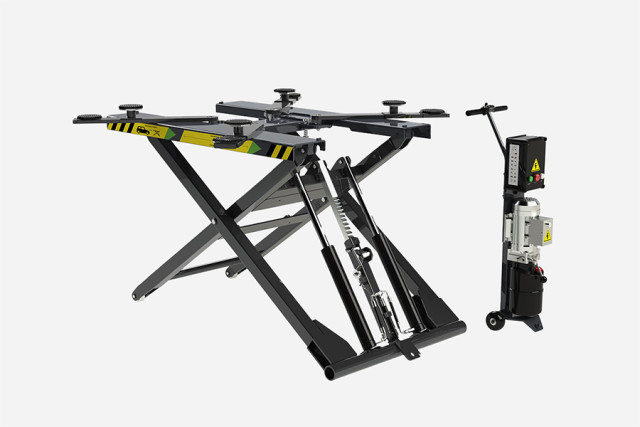
Mobile car lift
FLEXIBLE & ADAPTABLE
Mobile car lifts offer great flexibility and can be quickly set up at various locations, making them ideal for lifting vehicles in cramped workshops or garages.
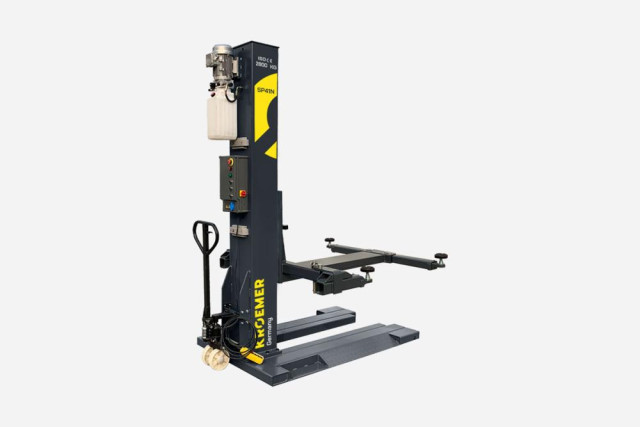
Post lifts
STRONG & RESILIENT
Post lifts offer a stable solution for lifting vehicles. They are particularly suitable for professional garages, enabling maintenance and repair work to be carried out with precision.
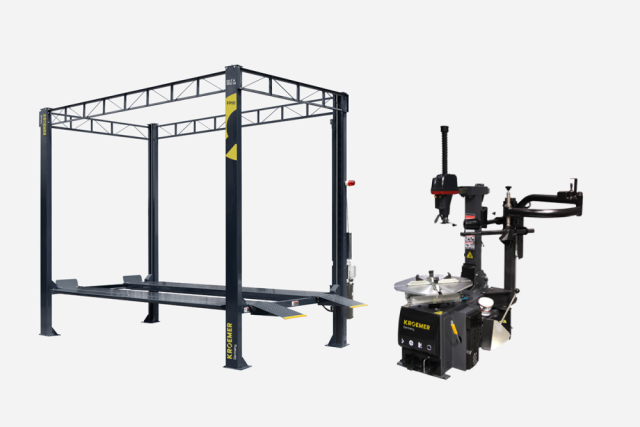
Garage equipment
WORKSHOP EQUIPMENT & TOOLS
From tyre changers and wheel balancers to wheel alignment machines, compressors, car lifts and turntables – we offer high-quality equipment for every workshop.
With these solutions, Kroemer covers all key areas of modern lifting and workshop technology. Whether for vehicle intake, repairs, tyre services or specialised lifting solutions – the individual systems can be combined effectively and adapted to specific operational requirements.
Examples of scissor lifts in use at customer sites
Scissor lifts are used in a variety of workshops and garages. Depending on the design – whether it is a mid-rise scissor lift, a double scissor lift or a drive-on scissor lift – the requirements, workflows and spatial conditions vary significantly. The following practical examples illustrate typical customer scenarios and demonstrate how the respective scissor lift can be optimally integrated into existing workshop layouts – from compact service bays to professional reception areas with wheel alignment facilities.
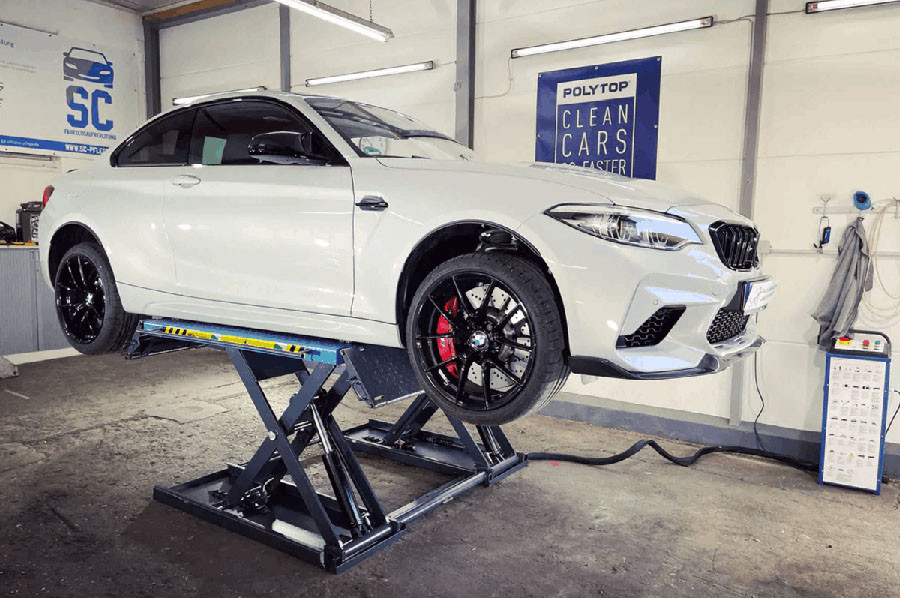
X10 mid-rise scissor lift for vehicle preparation
The picture shows a white BMW 1 Series Coupé on a Kroemer X10 ‘Fulda’ scissor lift. Thanks to its attractive price, this scissor lift is very popular with vehicle detailers. The special design of the scissor lift allows all work on the sides of the vehicle to be carried out without any problems. Should the scissor lift ever be in the way or if work needs to be carried out outdoors, the lift can be easily moved from its position using the accompanying mobile kit. By purchasing this scissor lift, you will see the quickest return on your investment thanks to its attractive price.
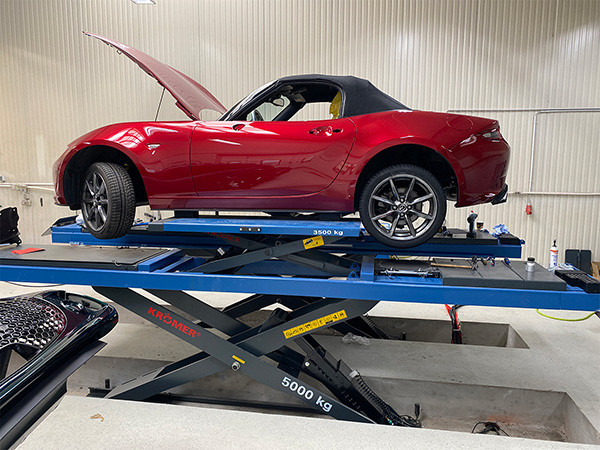
XX63 full-rise scissor lift for paintwork
The customer photo shows a modern paint shop where a Kroemer full-rise scissor lift is used as the central workstation for bodywork and paintwork. The lift allows the car to be raised to an ergonomic working height, so that sills, bumpers and door areas can be properly prepared and painted. Thanks to the sturdy full-rise-scissor design, the vehicle stands steady with minimal vibration – a crucial factor for precise paintwork. The generous lifting height makes it easier to work whilst standing, whilst the robust drive-on ramps ensure the vehicle is positioned securely.
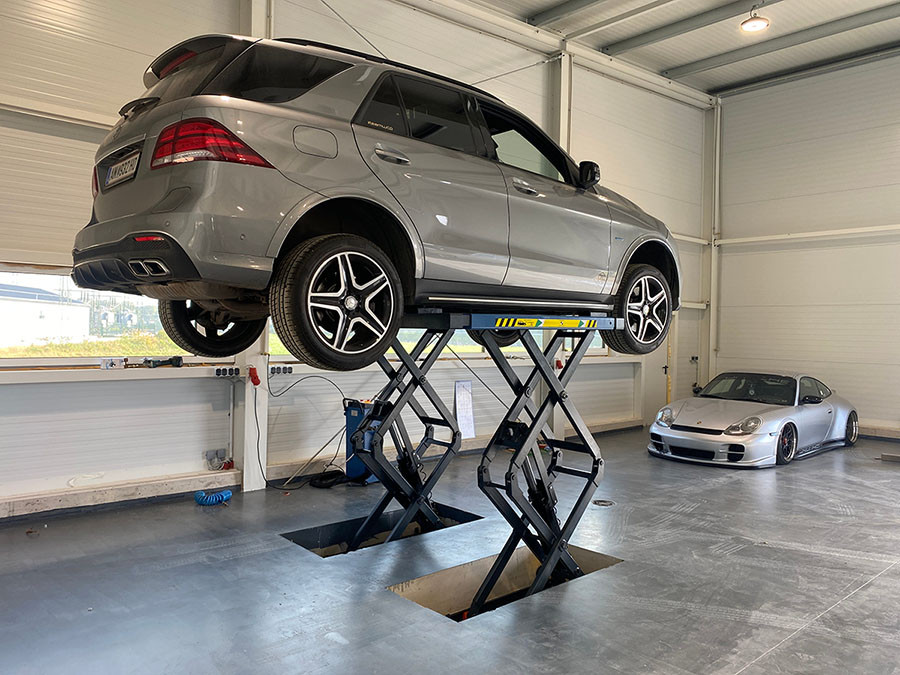
XX82 scissor lift for vehicle intake
The customer photo shows a modern walk-in service bay where a Kroemer drive-on scissor lift is used as the central inspection and service platform. The drive-on scissor lift allows vehicles to be presented at an ergonomic working height in the customer’s presence, clearly highlighting any faults with the chassis, brakes or underbody. Thanks to the robust double-scissor technology and the integrated axle-free lifting function, wheels can be raised and inspections carried out efficiently. The flush integration into the workshop floor also ensures a clean appearance and a smooth vehicle flow – ideal for structured intake processes and professional 3D wheel alignment.
FAQs: Scissor Lifts – Frequently Asked Questions & Answers
Instructions, inspection logs, hydraulic diagrams, troubleshooting guides and information on adjustment options are available to download directly from the relevant product page. Technical drawings and images are also available there.
Kroemer places great emphasis on independently produced, practical documentation – tailored to the specific scissor lift. The documents are clearly structured and designed for real-world workshop use. Use with products from other manufacturers is generally possible, but is provided without warranty.
In Germany, almost every household and commercial premises has a 400-volt connection in the distribution box. Whilst 230 volts is predominantly used in the domestic sector, 400 volts is usually employed in workshops. For machinery, 400 volts is technically the cleaner and more durable solution.
A three-phase 400-volt motor does not require an auxiliary capacitor, whereas 230-volt systems do – this can create an additional source of error. Furthermore, the starting current for 230-volt pumps is significantly higher, which results in increased power consumption and requires a suitable C16 fuse to prevent the circuit breaker from tripping.
For commercial customers, we generally recommend a 400-volt system. Industrial power is also the better choice for private users, provided a 400-volt connection is available.
In principle, yes, but a one-sided load is only suitable for certain models, as there is otherwise a risk of causing the platform to become unbalanced. This is the case, for example, with the X10 short-stroke scissor lift – but not with the other models. Up to 1000 kg, this is not a problem. Above this, a counterweight should be placed on the opposite side so that the difference in load between the sides does not exceed 1000 kg. The permissible lifting capacity of the scissor lift naturally still applies.
Yes, there are a few important points to consider regarding the ground surface before installing a scissor lift. The surface must be level, load-bearing and capable of withstanding long-term loads. According to the concrete foundation plan (shown here as an example for the X60 short-stroke scissor lift, concrete foundation plans can be found in the download section for the respective product!), the floor should be level, with any unevenness not exceeding 3 mm. In the case of freshly poured concrete, a curing period of 28 days must also be observed. A concrete foundation with a minimum thickness of 150 mm (depending on the model) in concrete grade C20/25 is recommended. Smooth or unsuitable surfaces, such as tiles on screed, should be avoided. On slippery floors, suitable anti-slip mats can help; in certain cases, professional anchoring to the subfloor may also be necessary. It is also important to drive the vehicle slowly and centrally onto the platform to prevent slipping. If in doubt, it is advisable to have the subfloor inspected by a specialist or structural engineer.
When purchasing a scissor lift, you should take note of the maximum load capacity — many models, for example, offer 3,000 kg. Consider the range of applications in your business or workshop, the vehicle body to be lifted, and any necessary safety margins. Pay attention to the manufacturer’s specifications in mm for lift height and platform length, such as 1,400 mm, to ensure that vehicles and jacks have sufficient space.
Yes, buying a scissor lift online is also a sensible option for garages, provided that all the key information about the model is presented clearly and transparently. At KROEMER, garage customers can compare technical specifications, load capacity, lift height, power supply options (230 V or 400 V) and suitable accessories (HLP46 hydraulic oil) directly online. This makes it quicker to find the scissor lift that meets the requirements of everyday work. At the same time, customers receive important information on the scope of delivery, installation, concrete foundation and operation. Buying online therefore saves time and makes the selection process easier. By ordering directly from the manufacturer, garages also benefit from a clear product overview and a suitable solution for professional use.
Depending on the model and design, a scissor lift is suitable for many typical vehicle repairs and fitting jobs in workshops and garages. These include, amongst other things, wheel work, engine work, gearbox work, as well as various bodywork and smart repair jobs. Mid-rise scissor lifts are frequently used for quick service jobs and wheel fitting, whilst full-rise scissor lifts and drive-on lifts cover a broader range of applications. With drive-on lifts, wheel work can also be carried out using a wheel-free lift, depending on the equipment. Due to accessibility issues, sills work can only be carried out as smart repair work using a double-column or drive-on scissor lift – in this case, a single-post or two-post car lift is generally recommended. Bodywork and more extensive paint preparation can be carried out effectively depending on the type of car lift. The specific tasks that can be carried out always depend on the design, the lifting height, access to the vehicle underbody and the car lift’s intended application. It is therefore advisable to select a scissor lift that is suitable for the planned work.
Yes and no – the vehicle should always be positioned on the designated platform or at the defined support points of the scissor lift. The extension ramps are primarily intended as a drive-on aid and not as a permanent load-bearing surface.
Although the access ramps are sturdily constructed and can each support up to approx. 900 kg, they are not designed to bear the full weight of the vehicle permanently. For safe operation, the vehicle must be positioned entirely on the load-bearing platform.
To ensure the scissor lift operates smoothly and to prevent damage to the vehicle or ceiling, the room must have a ceiling height of at least 4.20 m or 4.50 m (depending on the vehicle and the car lift’s maximum lifting height). If you want to be on the safe side, we recommend a ceiling height of at least 5 m. Of course, this depends on the maximum lifting height of the car lift (up to 2 m for full-rise scissor lifts) plus the height of the vehicles to be lifted. So, before purchasing, assess the conditions in your garage or workshop and the vehicles you intend to lift. Please refer to the technical drawing on the relevant product page for the dimensions of the car lift.
HLP 46 hydraulic oil is generally recommended for KROEMER scissor lifts. All our car lifts are designed for use with this hydraulic oil, as it ensures reliable and smooth operation during normal workshop use. HLP 46 can generally be used down to around -7 °C. However, in colder regions or at very low ambient temperatures, changes in viscosity may occur in isolated cases. If this causes the car lift to operate more sluggishly, the drain valve can be adjusted accordingly to allow more oil into the circuit. It is important to always use a high-quality hydraulic oil that meets the recommended specification.